What is choking and how to recognize and respond to Infant Choking
Choking can happen when a baby’s airway becomes blocked by food or another object. Knowing the signs and responding quickly can help in an emergency.
This guide is provided for First Aid education and reference. For an actual emergency, seek professional emergency assistance immediately.
Signs of Severe Choking
A choking baby may:
- Be unable to breathe
- Be unable to cry or make a sound
- Have little or no effective cough
- Show increasing difficulty breathing
- Become unresponsive
A baby who can still cough or make sounds may have a partial airway obstruction. Encourage coughing and monitor the baby closely.
What to Do When a Baby Is Choking
1. Assess the Situation
Make sure the surroundings are safe and determine whether the baby is choking severely.
Ask someone nearby to contact emergency services and bring appropriate first aid equipment when available.

2. Give 5 Back Blows
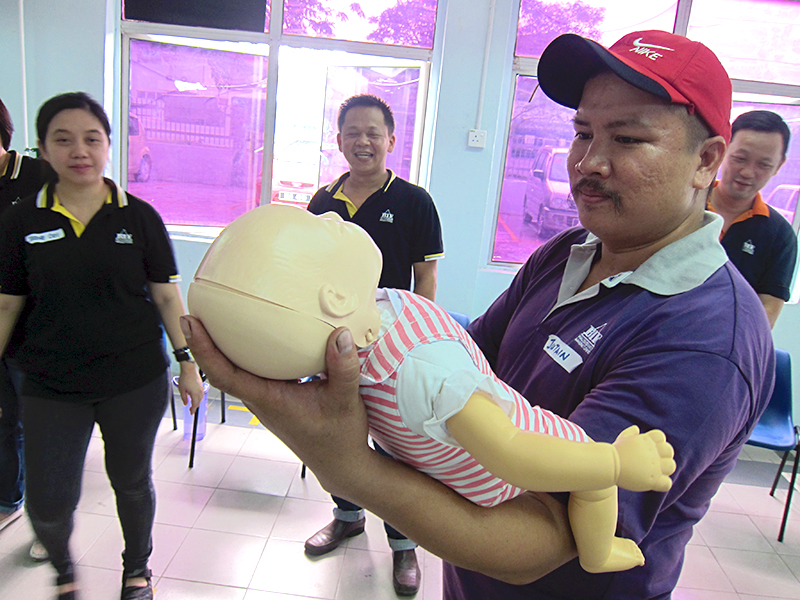
Support the baby’s head, neck and body securely.
Position the baby face-down with the head lower than the chest, then give 5 back blows between the shoulder bladesusing the heel of your hand.

3. Give 5 Chest Thrusts
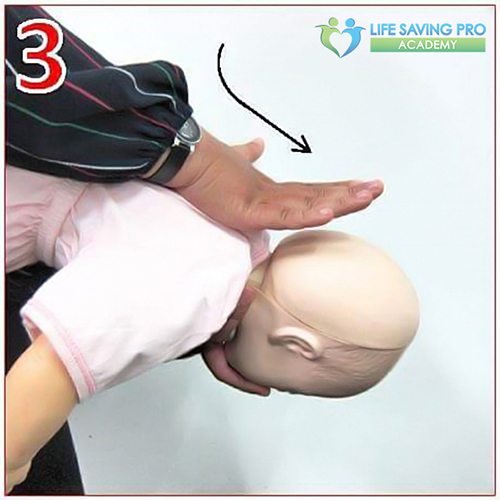
Carefully turn the baby face-up while continuing to support the head.
Give 5 chest thrusts using the appropriate infant technique.
4. Continue the Sequence
Repeat:
5 Back Blows → 5 Chest Thrusts
Continue until the object is expelled, the baby can breathe normally, or the baby becomes unresponsive.

5. If the Baby Becomes Unresponsive
If the baby becomes unresponsive, start CPR and follow the appropriate emergency response procedure.
Use an AED as soon as one is available and continue CPR until help arrives or the baby shows signs of life.
Baby Choking vs Child Choking
Babies and older children are not treated exactly the same way for severe choking.
For an infant:
5 back blows + 5 chest thrusts
For an older child:
5 back blows + 5 abdominal thrusts
The correct technique depends on the casualty’s age and condition.
Common Mistakes We See During First Aid Training
One common mistake is assuming that the same choking technique can be used for babies, children and adults.
Another is trying to remove an object blindly from the mouth.
In First Aid, recognising the situation and choosing the correct technique is just as important as remembering the steps.
Photos & Videos Are for Reference Only
The photos and videos on this page are provided to help you understand and visualise the First Aid response.
However:
Watching a video or reading a guide cannot replace practical First Aid training.
Choking, CPR and other lifesaving skills involve positioning, technique and hands-on practice.
We strongly recommend attending a practical First Aid / CPR training class and learning these skills under the guidance of a qualified trainer.
Learn It. Practise It. Be Ready.
Learn Practical First Aid Skills with LSPA
LSPA provides practical First Aid, CPR and AED training for companies, workplaces and individuals in Malaysia.
Training can be conducted in:
Bahasa Melayu • English • BM + English
Our trainers can adjust the explanation and practical exercises according to the participants’ level and needs.
Special Offer for Readers of This Guide
Did you find this article while learning about baby choking?
Readers who come to LSPA through this guide can receive:
50% OFF the Normal Training Price
This offer is intended to encourage readers to move from reading and watching to proper practical training.
Mention this article when contacting LSPA to claim the offer.
Why Learn from LSPA?
Since 2013, LSPA has trained more than 100,000 First Aiders and conducted more than 5,000 First Aid training sessions.
Our trainers include professionals with backgrounds in medical, nursing, paramedic and emergency response.
[Learn More About First Aid Training Malaysia]